Proposal · EnergyDifficulty mediumReading time: 10 min
The Council resolves and grants the roofs; the rest depends on an energy community, citizens’ capital and the GSE. It can start with a single roof.
The town’s roofs in the sun, for everyone
Schools, gyms, depots, the town hall: public roofs that sit in the sun every day and today produce nothing. The proposal is simple. The Municipality makes the roofs available, citizens fund the panels through a Renewable Energy Community, and the energy produced comes back to the town: to the public buildings that use it and to the homes of those who took part. Nobody needs to own a roof to be part of it.
This page explains the idea. The map of the roofs, the limits of the estimates, the procedure and the sources are further down.
The idea in brief
- The Municipality lends the roofs of its buildings free of charge: it provides the space, not the money, and the property stays public.
- Anyone who wants to can take part; nobody is obliged. Members fund the panels with shares in a Renewable Energy Community, even if they rent or live in a block of flats.
- Public buildings consume on site what they produce and cut their bills; the rest is shared with the community, with the GSE incentive tariff for twenty years.
- A public map, built on verifiable data, shows roof by roof where an installation would yield the most.
Why talk about it
You cannot fence in the sun
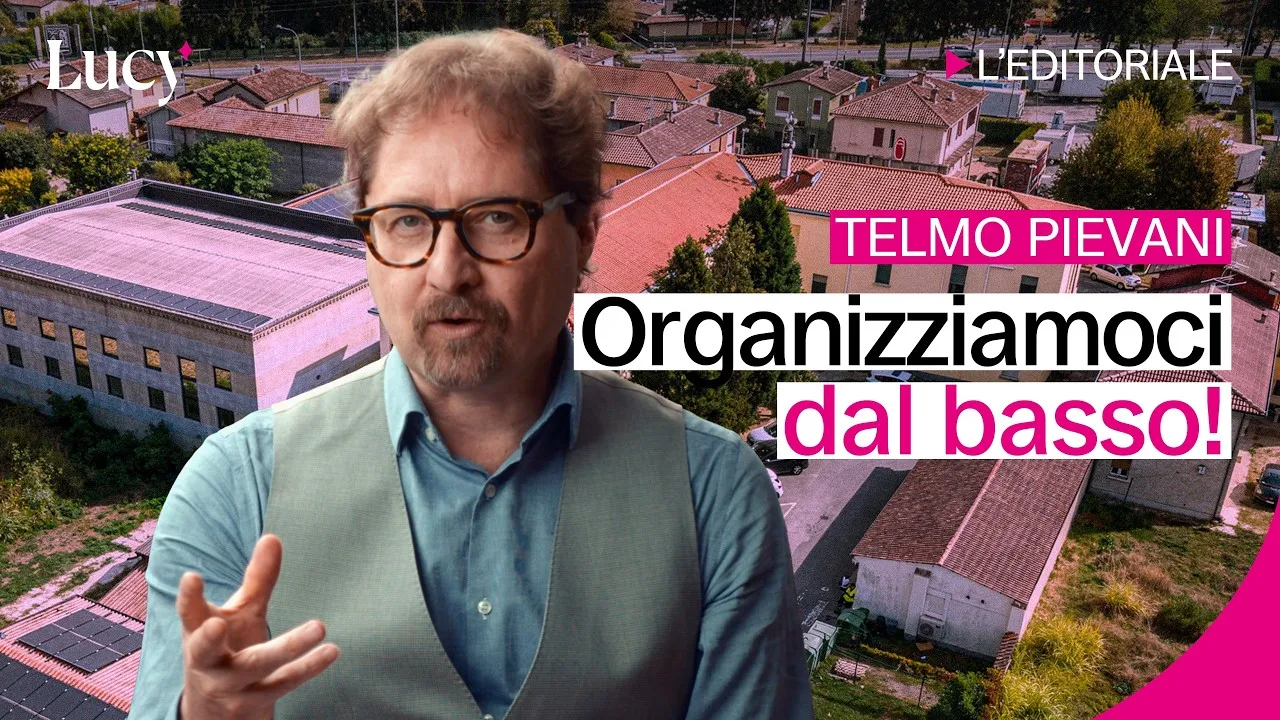
The underlying idea is not new, and nobody explains it better than the philosopher of science Telmo Pievani: the sun’s energy is a good that is not used up and cannot be fenced in, and the technology to collect it has become cheap enough to belong to everyone. How we organise it is a political choice, not a technical one. Five minutes worth more than any table. The video is in Italian.
Inside the panel
How a solar panel works
A solar panel has no moving parts, burns nothing and makes no noise. It turns light directly into electricity, thanks to a property of silicon, the same material used in chips. The model below can be rotated, taken apart into its layers and lit up.
Loading the 3D model…
1. Light passes through the glass
The tempered glass on the front protects the cells from rain, hail and dust and lets light through. Two transparent films keep everything sealed.
2. Silicon frees electrons
Each cell is made of two layers of silicon treated differently. Where they meet, a small electric field forms. Light knocks electrons loose from the silicon atoms, and the field pushes them all the same way: that is an electric current.
3. Cells in a row add up their voltage
A single cell gives about half a volt. Connected one after another, the cells of a panel reach a few tens of volts. The thin metal strips on the cells collect the current.
4. Current leaves through the box at the back
Behind the panel, a small box connects the cables. Inside are diodes that “skip” shaded cells, so a leaf or a chimney does not switch off the whole row.
5. The inverter makes it match the sockets
The panel produces direct current. A device called an inverter turns it into 230-volt alternating current, the kind in household sockets: it goes to the building first and, if there is extra, to the grid.
≈ 400 W
Output of a panel of about 2 m²
About two and a half make one kilowatt peak (kWp).
≈ 1 in 5
The share of light that becomes electricity
Commercial panels are around 20-22% efficient.
≈ 1,200 kWh
Produced in a year by 1 kWp in Saronno
PVGIS reference value: almost half of a household’s consumption.
25-30 years
Lifetime of a panel
Manufacturers’ warranties usually guarantee at least 80% of output after 25 years.
- It works on cloudy days too, but produces much less: what counts is light, not heat.
- Heat slows it down. Cells work better when cool: a clear spring day can be worth more than a muggy July afternoon.
- It needs little maintenance: some cleaning and a periodic check of the electrical system.
The proposal
Three parties, three contributions
The Municipality provides the roofs
Not the money: the space. A council resolution lends the roofs of the selected buildings free of charge for the lifetime of the installation. The property stays public and the Municipality advances nothing.
Citizens provide the capital
Those who want to, not those who must: an Energy Community is a voluntary membership, and whoever stays out pays nothing and loses nothing. Members subscribe shares in the community and take part in the production without installing or maintaining anything on their own roof, which is impossible anyway for those who rent or live in a block of flats. There are Italian towns where it has already happened: hundreds of citizens jointly funded an installation on a public building.
The energy comes back to the town
Public buildings consume on site what they produce and cut the municipal bill. The rest is shared with the members of the community, and on that share the GSE, the national energy services operator, pays the incentive tariff for twenty years.
The starting point
Saronno has little space and many roofs
Saronno is among the densest towns in the province of Varese: almost 39,000 inhabitants in just under 11 square kilometres. There are no open areas to fill with panels, nor would that be desirable. But there are surfaces already built, exposed to the sun every day, that produce nothing: the roofs of public buildings.
Renewable Energy Communities have existed in Italian law since 2021 and new ones are founded every month; one based in Saronno is already established, but its active configuration does not cover the town. The expertise is at hand; what is missing is a configuration that covers the roofs of Saronno.
There is also a deadline. The GSE incentive tariff on shared energy can be applied for until 31 December 2027, or earlier if the national quota runs out. Whoever joins now secures twenty years of guaranteed tariff.
From the point of view of a resident
What I put in and what I get back
Nobody is obliged: you take part if you want to, and you can join later. Members subscribe a share of the community: an amount decided together, within a family’s reach. In return they receive, for twenty years, their part of the tariff the GSE pays on shared energy, and the satisfaction of seeing their contribution on a specific roof, with a name: their children’s school, the gym, the library.
There is no need to start with every building. One can begin with the roofs that yield the most and expand with the returns, one roof at a time.
A constraint already checked.An Energy Community can share energy only between connection points served by the same primary substation. On the GSE interactive map, consulted on 13 September 2026, Saronno falls within the conventional area AC001E01401: a single area for the whole town, so a single configuration can share energy between all the municipal roofs and the homes of the members. Before filing the application the data must be confirmed again on the map, because the GSE updates it.
What it takes
The steps for the administration
- Confirm the primary substation area on the GSE map at the time of the application: today Saronno falls entirely within area AC001E01401, so the sharing perimeter is the whole town.
- Resolve to lend the roofs free of charge to the Energy Community configuration, for a term aligned with the life of the installation.
- Commission the technical checks: structural load capacity of the roofs, condition of the roofing and possible presence of asbestos, grid connection capacity.
- Choose the legal form: open a configuration for Saronno within an existing community, or found a new one.
- File the application with the GSE within the window for access to the incentive tariff.
Risk
What about hail?
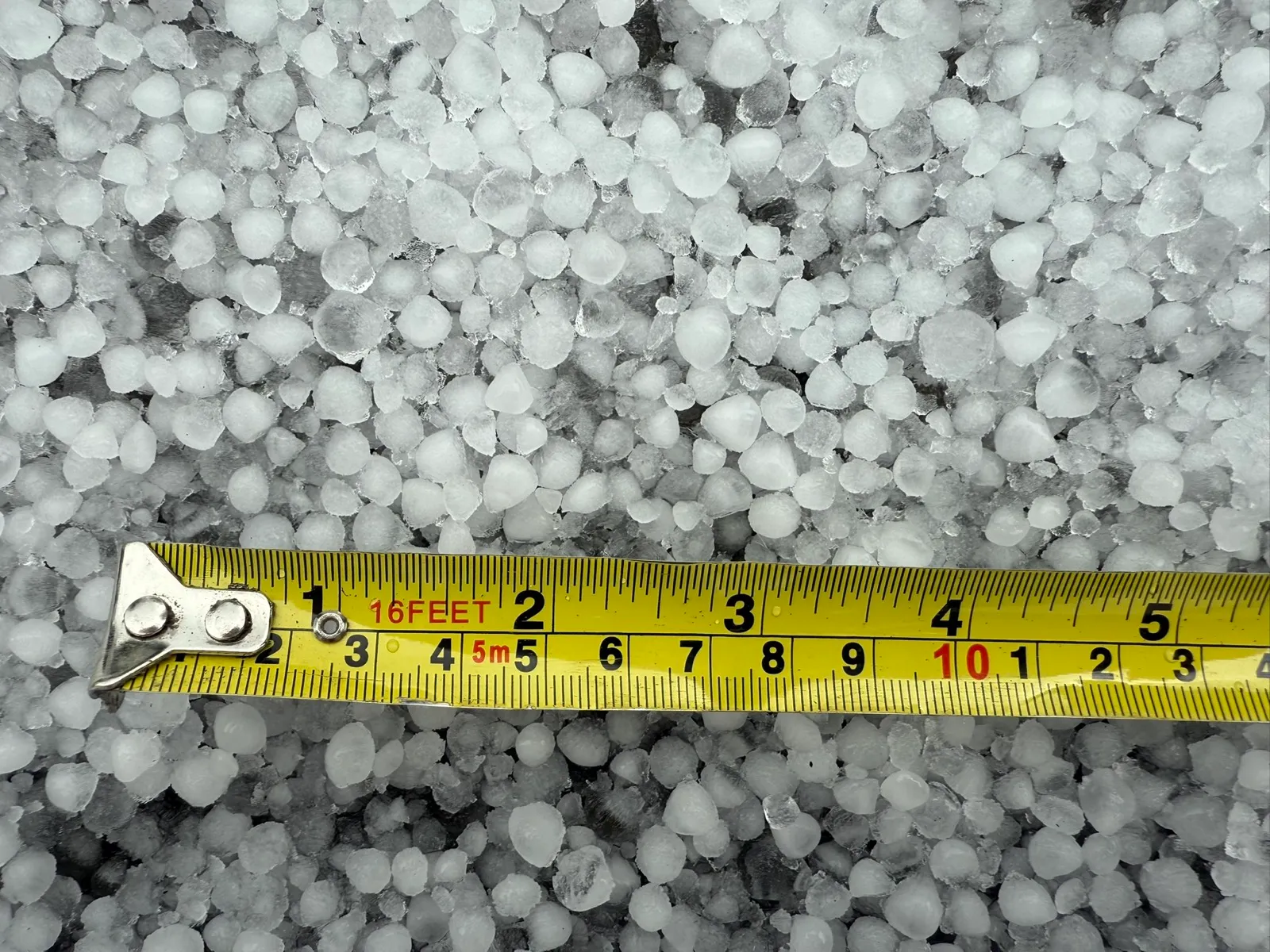
Severe hailstorms are becoming more frequent in Lombardy. Northern Italy is the place in the world where very large hailstones have increased most over the last seventy years, and in July 2023 a 19-centimetre stone fell in Friuli, the largest ever seen in Europe. A large stone can break a panel’s glass. There are five ways to protect the panels, from the simplest to the most experimental. Which one to choose will be up to the engineers when the system is designed.

1. Tougher panels
Not all panels are the same: some have thicker glass and are certified to withstand larger stones. In tests by an independent laboratory, 4.5 cm hail broke 61% of panels with thin glass and only 7% of those with thick glass.
Cost: modest. The tender only needs to require panels rated HW4 or HW5 in the Swiss hail register.
2. Insurance
It does not prevent the damage, but it pays for the repair. For a household system a policy covering hail costs about 100–500 euros a year; for a public building the price is agreed case by case. It is not compulsory for the Municipality: it is a choice. It matters also because manufacturers’ warranties usually do not cover hail.
Cost: a fixed yearly expense.
3. A fixed net above the panels
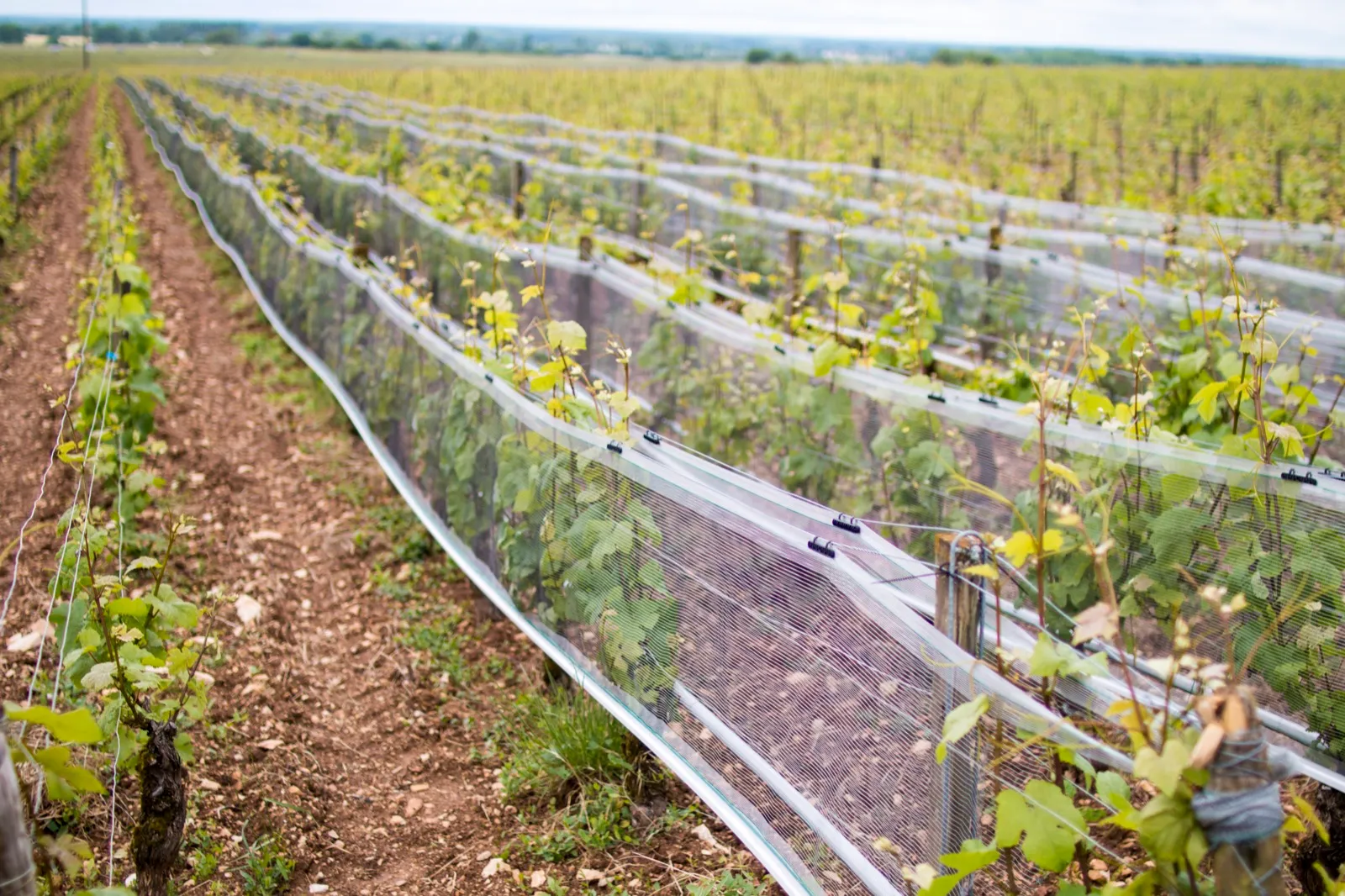
This is what orchards do: a net stretched above the panels stops the stones. The drawback is that it casts shade all year, sunny days included: according to the manufacturer the panels produce 9–15% less, and the net must be replaced every 5–7 years.
Cost: cheap to install, but paid for in lost energy.
4. Panels that take cover by themselves
In large ground-mounted plants the panels sit on supports that turn to follow the sun. When the weather service warns of hail, they turn them almost upright, so the stones strike them edge-on. It is already on the market in the United States.
On roofs the panels are fixed, so this cannot be done. Ready-to-buy moving covers that slide over rooftop panels do not exist today.
Cost: high, and not suited to roofs for now.
5. A net that unrolls only when needed
The idea combines points 3 and 4: a net rolled up beside the panels, which a motor unrolls only when a hail alert arrives. It protects when needed and casts no shade the rest of the year.
The parts already exist. In farming an Italian company sells motorised nets that cover half a hectare of orchard in about 8 minutes, controlled by text message. The Civil Protection weather radar shows every 5 minutes where hail is falling: watching the storms approaching gains only a few minutes, and false alarms are frequent.

Not for panels, though. We searched in Europe, the United States and China and found no product on sale, in English or in Chinese. The closest case is a prototype from a technical school in Klagenfurt, Austria: clear plastic slats that slide over the panels when the weather radar signals danger. At the University of Graz a test system on a roof folds the panels face to face when a storm arrives. And a 2026 study simulated, on a roof in Brescia, clear plastic panels sliding on motorised rails driven by weather sensors. There are also a few patents, but none of these ideas has become a product.
The open problem is wind: the net must close just as the storm arrives, and it needs supports fixed to the roof, not to the panels. Then there is ice, which can jam the mechanism, power cuts during storms, which stop it without a battery, and the obstacle for firefighters. A municipal roof could host a trial, perhaps together with a local technical school.
Cost: still to be estimated, since nobody sells it yet.
Options 1 and 2 can be combined: tougher panels reduce the damage, insurance covers what remains.
The data
Where to start
The colour measures yield: how many kilowatt-hours each installed kilowatt produces in a year. It is not the same as total output, which only rewards large buildings. Yield says how well a roof converts the sun it receives, and therefore where to start when resources are not enough for every building at once.
- Low
- Average
- Good
- Very good
- Excellent
Source: Includes solar data from Google
Honesty
What this page is not
It is not a feasibility study and cannot replace one. It is an order-of-magnitude estimate made with remotely sensed data and stated assumptions, useful to tell whether it is worth looking further. What is missing, and only a survey on site can provide:
- Structural capacity. None of these roofs has been checked for the extra load of modules and mounting structures. It is the first constraint that can rule a building out.
- Roof condition and asbestos. On public buildings from the 1960s and 1970s asbestos cement is a concrete possibility. Where present it must be removed first: it changes costs and the sequence of works, but it is also an opportunity to do it.
- Shading from the ground. Trees, nearby buildings and plant rooms matter, and remotely sensed data see them only in part and only at the date of the survey.
- Grid connection. The capacity that can be installed on paper is not what the distributor authorises to feed in at that point.
- Heritage protection. Three interesting municipal properties are not counted for precisely this reason: Villa "Gianetti" (F052), Palazzo "Visconti" (F048), Teatro "G. Pasta" (F064). They must go to the heritage authority, not be taken for granted.
- Survey date. A roof rebuilt after the last aerial imagery does not appear as it is today.
- Hail risk. There is no public data on hail damage to photovoltaic systems in Italy, and the production estimate does not account for it.
- Positions to confirm. Some buildings in the municipal list are given by street and number only, and their position was inferred from the street axis: they are flagged in the table.
For the same reason the yield computed from remotely sensed data is compared with the independent PVGIS reference: when the two estimates differ by more than 25% the figure is flagged rather than published as sound.
Useful links
- Patrimonio immobiliare del Comune di Saronno — elenco fabbricati 2025
Municipality of Saronno, transparency portal
Identification of the buildings actually owned by the Municipality.
- Solar API — Building Insights
Google Maps Platform
Roof pitch geometry, tilt, azimuth, shading and module yield.
- Solar API — Data Layers
Google Maps Platform
Raster layers of the analysis page: recognised roofs, annual and monthly solar flux, hourly shadows, heights.
- PVGIS 5.3 — Photovoltaic Geographical Information System
European Commission, Joint Research Centre
Independent specific yield for Saronno, used as a cross-check.
- OpenStreetMap
OpenStreetMap contributors (ODbL)
Building footprints and address checks.
- Confini delle unità amministrative a fini statistici
Istat (CC-BY 4.0)
Boundary of the municipal territory of Saronno drawn on the map.
- DM MASE 414/2023 (CACER) e Regole Operative per l’autoconsumo diffuso
GSE
Incentive tariff on shared energy and requirements for Renewable Energy Communities.
- Mappa interattiva delle cabine primarie
GSE
Check of the perimeter within which energy can be shared: Saronno falls within conventional area AC001E01401 (consulted on 13 September 2026).
- Aurora CER — Comunità Energetica Rinnovabile
Aurora CER, social enterprise association based in Saronno
An Energy Community already established locally, today active in other towns.
- Indicatori di efficienza e decarbonizzazione del sistema energetico
ISPRA
Grid emission factor used to compute the CO₂ avoided.
- Contrasting trends in very large hail events and related economic losses across the globe
Battaglioli et al., Nature Geoscience 19 (2026), ESSL
Increase in very large hail, fastest in northern Italy.
- Hail Stress Sequence — PV Module Reliability Scorecard
Kiwa PVEL
Share of modules broken by hail depending on glass thickness.
- Registro grandine (Hagelregister)
VKF / AEAI, association of cantonal insurers (Switzerland)
Hail resistance classes HW1 to HW5.
- Polizze per rischi catastrofali
Italian Ministry of Enterprises and Made in Italy
Events covered by the obligation (hail is not among them) and who must comply.
- Costo dell’assicurazione contro la grandine per i pannelli fotovoltaici
Energit
Order of magnitude of annual premiums.
- Hail Blocker Net
Solarnets
Production loss and lifetime of fixed nets.
- Anti-hail automatic system — Netherlands
Spinazzè Group
Motorised anti-hail net for orchards: area and closing time.
- SmartHailGuard
HTL Mössingerstraße, Klagenfurt (Austria), school project
Prototype of slat protection that extends over the panels on a weather alert.
- FLAPTrack: pannelli che inseguono il sole e si ripiegano con il maltempo
TU Graz
Rooftop prototype that folds the panels when a storm arrives.
- Integrating Life Cycle Assessment and Social Discounting to Evaluate Temporal Risk and Environmental Sustainability in Hail-Exposed Photovoltaic Systems
Sustainability (MDPI), 2026
Simulation on a roof in Brescia of retractable polycarbonate panels.
- Piattaforma Radar-DPC: prodotti meteo in open access
Italian Civil Protection Department
Probability of hail (POH) updated every 5 minutes.
- Array Technologies debuts autonomous hail protection system for solar trackers
Solar Power World
Panels on moving supports that take cover on a hail alert.
Yield reference: PVGIS PVGIS-SARAH3, downloaded on 2026-09-05, for Saronno (VA). Roof geometry data updated on 2026-10-10.
There is also the detailed analysis: sun, hour-by-hour shadows and modules roof by roof.
Open the solar analysis